
How to Choose the Right Wall Clock Size
A practical guide to choosing a wall clock size using usable wall space, furniture width, viewing distance, ceiling height and a simple removable-tape test.
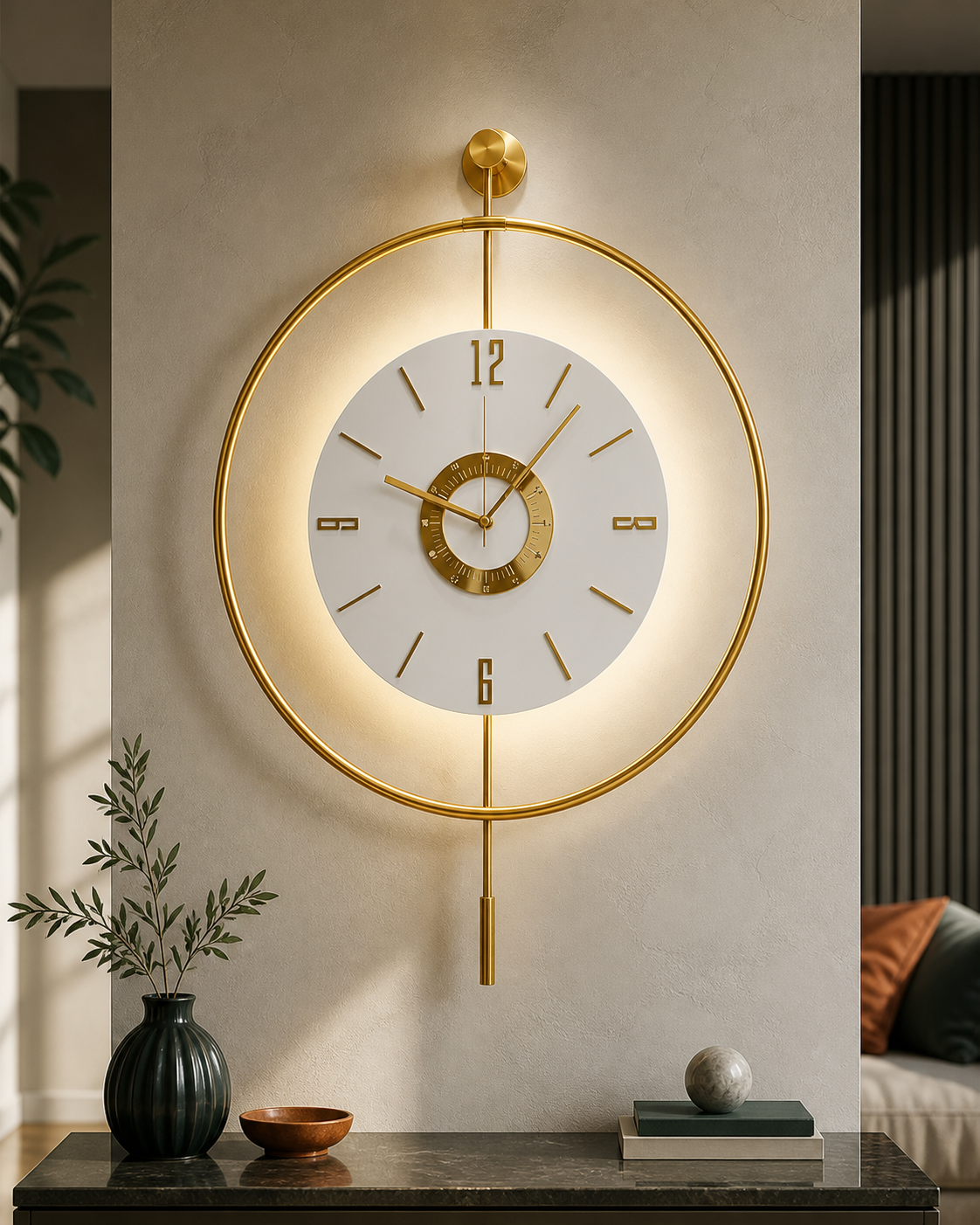
Choose a wall clock by measuring the usable wall area, relating the clock to the furniture below it, and testing the outline with removable tape. A 50 cm round clock works as a compact focal point, while a 50 × 75 cm pendulum clock adds stronger vertical presence.
The right wall clock should feel intentional from across the room without crowding artwork, shelves or architectural details. Use the steps below before ordering.
What does wall clock size actually mean?
Wall clock size is the full visual footprint of the piece, not only the diameter of the dial. Pendulums, rays, frames and decorative metal elements can make a clock appear much larger than its central face. Always compare the listed overall width and height with your available wall space.
For example, a 50 cm round design occupies a compact square area. A 50 × 75 cm design uses a similar width but adds height, movement and more visual weight. That difference matters above a console, in a dining room or on a tall entry wall.
How do you measure the usable wall space?
Measure the clear width and height after accounting for doors, windows, switches, sconces, shelves and nearby artwork. Do not use the total wall dimensions if part of that wall is visually occupied.
- Measure the width of the open wall section.
- Measure the height from the top of the furniture to the ceiling or molding.
- Mark the clock's overall dimensions with removable painter's tape.
- Stand at the room's usual viewing distance and check the balance.
The tape test is simple, but it is the most reliable way to understand scale. Leave the outline in place for a few hours and look at it in both daylight and evening light.
How large should a clock be above furniture?
As a useful starting point, choose a clock that is roughly one-half to two-thirds of the width of the furniture beneath it. This is a visual guideline, not a strict rule. A slender console can support a narrower clock, while a wide sideboard may need a larger clock or a clock paired with smaller decorative elements.
Keep enough breathing room around the frame. The clock should not touch the ceiling line, shelving or adjacent art. If it looks isolated, increase the scale. If it competes with everything around it, choose a smaller footprint.
When should you choose a 50 cm round clock?
A 50 cm round clock is versatile for bedrooms, kitchens, home offices and smaller living spaces. It creates a clear focal point without dominating the room. It also works well where the surrounding furniture has a low or compact profile.
Round clocks are especially useful when the room already contains strong vertical lines, such as tall cabinets, paneling or floor-to-ceiling curtains. The circular shape softens those lines and adds contrast.
When is a 50 × 75 cm pendulum clock better?
A 50 × 75 cm clock suits a larger wall, tall ceiling or narrow vertical section. Its extra height helps connect the space between furniture and the ceiling. Pendulum designs also create gentle movement, so they become more noticeable than a round clock of similar width.
Use this format above a console, in an entryway, beside a dining area or on a feature wall. Before installation, confirm that the pendulum has clear space to move and that the clock is mounted securely according to the product instructions.
How high should a wall clock hang?
Place the center of the clock near average eye level—often around 145 to 160 cm from the floor—then adjust for the room. Above furniture, leave enough separation so the clock reads as its own object but still belongs to the arrangement. In rooms where people are mostly seated, a slightly lower placement can feel more natural.
For a tall pendulum clock, judge the entire silhouette rather than only the dial. The lower element should not appear to collide with the furniture beneath it.
What viewing distance should you consider?
The farther away the clock is viewed, the more visual presence it needs. A small design that feels balanced from one meter away may disappear across an open-plan room. Check legibility from the places where you actually sit, enter and move through the space.
Finish also changes perceived size. Gold and silver surfaces catch light and can feel more prominent. Dark finishes may create a stronger silhouette on a pale wall, while tonal finishes can appear quieter.
Common wall clock sizing mistakes
- Measuring only the dial instead of the full frame.
- Ignoring the height of a pendulum or decorative elements.
- Choosing a clock based on close-up product photography alone.
- Hanging the clock too close to the ceiling or furniture.
- Forgetting to check door swings, switches and nearby lighting.
- Skipping the removable-tape test before installation.
Quick decision guide
Choose a 50 cm round clock for a compact focal point and flexible placement. Choose a 50 × 75 cm pendulum clock when you want stronger vertical emphasis, movement and presence. If your wall sits between the two, tape both outlines and view them from across the room.
Explore the Orvasco wall clock collection to compare round, illuminated, tempered-glass and pendulum designs.
Frequently asked questions
Can a wall clock be too large?
Yes. A clock is too large when it crowds nearby features, extends beyond the furniture arrangement or makes the wall feel visually heavy. Preserve clear space around the frame.
Should a clock be centered on the wall or the furniture?
Usually center it on the furniture grouping, because that is the visual anchor. Centering on the entire wall can look off-balance when the furniture is not centered.
What should I do before drilling?
Confirm the full dimensions, mark the outline, locate a suitable fixing point and follow the mounting instructions supplied with the clock. When in doubt, use a qualified installer.